
Esophageal Manometry
Your esophagus is a muscular tube that moves food from your throat to your stomach in a wave-like motion called peristalsis.
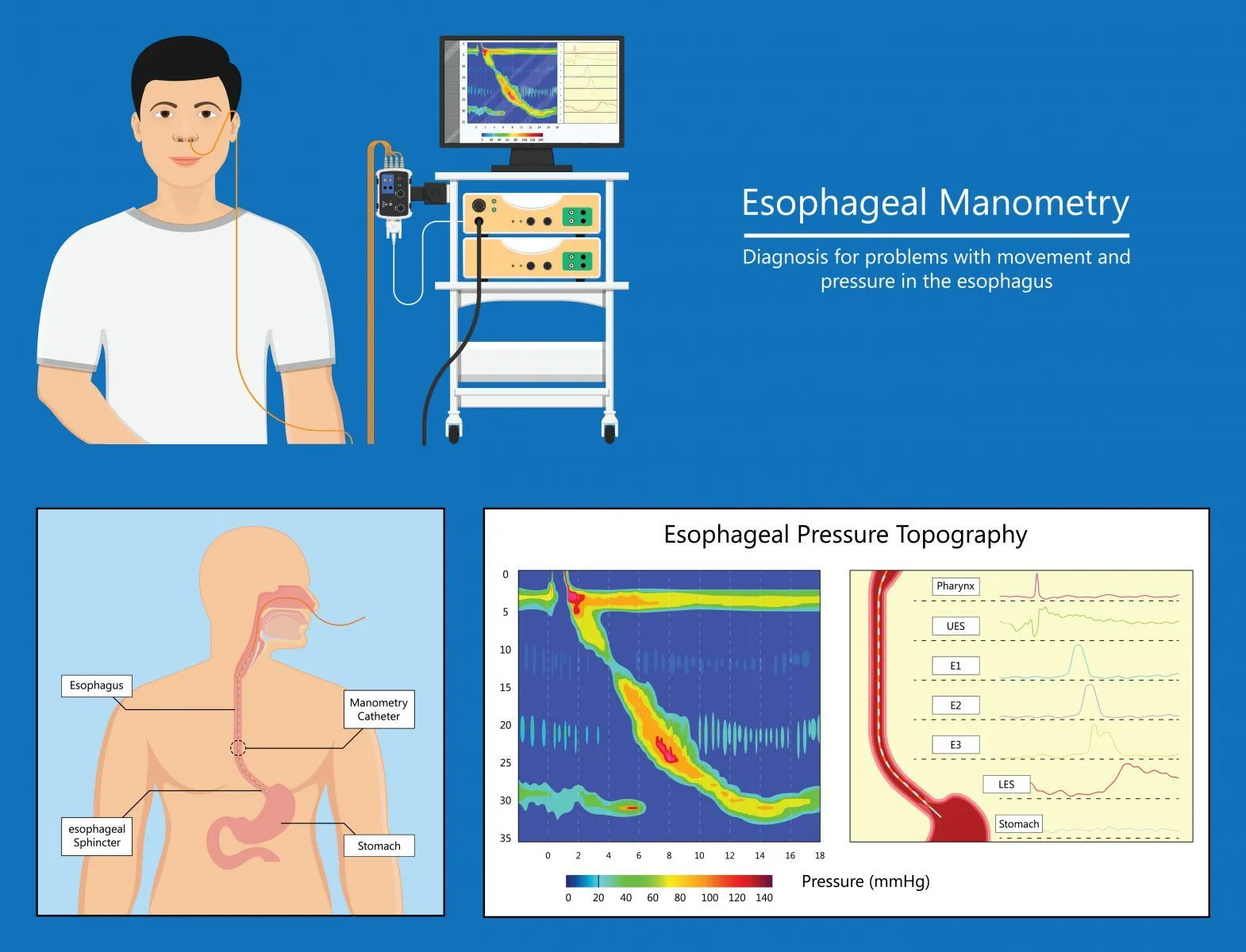
Esophageal manometry is a procedure that is used to identify problems with movement and pressure in your esophagus that may lead to symptoms like heartburn and difficulty swallowing. It measures the muscle strength and muscle coordination of your esophagus when you swallow. It also examines the strength of the lower esophageal sphincter (or LES), a muscular valve that connects your esophagus with your stomach. This valve relaxes to allow food and liquid to enter your stomach, and closes to prevent food and liquid from refluxing back up into your esophagus.
During the manometry study, a thin, pressure-sensitive tube is passed through your nose, along the back of the throat, down your esophagus, and into your stomach. This tube is connected to a machine that records the contractions of your esophageal muscles on a graph.
The tube does interfere with your breathing. You will not be sedated for the procedure. A topical anesthetic may be applied to your nose to make placing the tube more comfortable. You may feel some discomfort when the tube is placed, and some patients will experience vomiting and/or coughing; however, most patients tolerate the procedure well.
There are some medications that may affect the results of manometry, such as PPIs and H2 blockers, commonly prescribed for heartburn. You may be asked to discontinue these medications prior to your procedure to ensure accurate test results. Discuss all medications with our office prior to your procedure.